Magic Piano:EDM Music game
- 3.9
- Rating
- 10.00M
- Installs
- Free
- Price

 Analysis by App-foxy
I approach rhythm games as quick tests of timing rather than as replacements for a real instrument, so I was curious to see where Magic Piano:EDM Music fits. It is a free music game from Happy Go Game, built around the idea of tapping along with songs in a piano-style interface. The store summary invites players to dive into rhythm and feel the music, while the short description keeps the concept simple: Magic Piano.
That simplicity is important. You are not opening a piano-learning course, a full music workstation, or a traditional arcade game with a large story attached. You are opening something designed to make musical timing immediately playable. In my experience, that makes it easy to try during a short break, but it also means the quality of the experience depends heavily on whether you want casual rhythm play or deeper musical control.
What to consider before downloading
The first decision is whether you enjoy reacting to music more than creating it. A rhythm game can make a familiar track feel active because every successful tap depends on listening and responding. It can also become tiring if you prefer selecting notes freely, practicing an instrument, or playing through a carefully structured campaign. Magic Piano:EDM Music is best judged as a music-focused game, not as a serious piano simulator.
You May Also Like

 AccuWeather: Weather Radar
AccuWeather Review: A Quick, Clear Forecast for Everyday Decisions
For everyday plans, the best forecast is the one you can understand quickly. AccuWeather makes rain timing, radar, and local conditions easy to act on, with a few trade-offs.

 Hill Climb Racing
Why Hill Climb Racing Still Turns Crashes Into One More Run
A tiny car, a bumpy hill and one more upgrade: Hill Climb Racing keeps resurfacing because its simple chaos makes every near-miss feel personal.

 AliExpress - Shopping App
AliExpress Makes Global Shopping Feel Personal, but Shoppers Bear the Risk
AliExpress turns a global marketplace into a pocket-sized discovery engine. Its reach is useful, its shopping loop compelling, and its trade-offs easy to miss.

 Lords Mobile: Kingdom Wars
Lords Mobile Is a Kingdom-Building Routine, Not a Quick Match
A case-by-case verdict on the building, battles, device demands, and social commitments that make Lords Mobile rewarding for some players and exhausting for others.

 PDF Scanner app - TapScanner
TapScanner Makes Paperwork Easier to Capture, Check, and Share
TapScanner makes scanning with a phone feel less like a rescue operation and more like a dependable step in getting work done. Its capture tools are useful, though not flawless.

 Block Blast!
 Shows How Much a Puzzle Game Can Leave Out
A quiet grid game shows why puzzle players increasingly value instant clarity, repeatable skill and low-pressure play—and where the genre still needs to catch up.
More From Our News Desk
View All News


I would also consider the kind of session you want. This style of game suits short bursts: a few songs while waiting, a quick attempt to improve your timing, or a relaxed way to keep your hands occupied with music in the background. It is less convincing for someone looking for a long-form progression system, a realistic keyboard layout, or a substitute for lessons.
The app is free to download, which lowers the barrier to trying it. Its in-app purchases range from $2.99 to $24.99 per item, so I would treat the free entry as a chance to evaluate the core experience before spending anything. That matters in rhythm games because personal taste in song selection and difficulty can determine whether the game remains enjoyable after the first session.
Compatibility is fairly broad for older Android devices because it requires Android 7.0 or later. The current version is 1.7.0, and the game was released on January 18, 2024. Those details make it approachable for many Android users, although compatibility alone does not guarantee that every device will deliver the same touch response or audio timing.
How the tapping feels in everyday use
When I play a piano-themed rhythm game, I pay attention to three things: whether the notes are easy to read, whether taps feel connected to the beat, and whether mistakes feel fair. Magic Piano:EDM Music works best when I focus on the song instead of staring at the screen. That is the central appeal of this format. The visual piano idea gives the hands a clear job, while the music provides the timing cue.
A realistic use case is a short evening break. I can put on headphones, play one attempt without committing to a long session, and stop when the song ends. That is more satisfying than scrolling through another feed because the game gives the break a small goal: stay with the rhythm and finish cleanly. It is also a reasonable choice for players who want something musical without learning controls that take several minutes to explain.
For the best response, I would close other demanding apps, use a stable volume level, and avoid playing in a noisy environment. Those are not glamorous tips, but rhythm games expose distractions quickly. If the audio is hard to hear or the phone is busy, a missed tap can feel like a gameplay problem when the real issue is concentration or device performance.
Headphones can help, especially when the song has a strong beat that is difficult to follow through a phone speaker. I would still test the game with the volume at a comfortable level rather than turning it up aggressively. The goal is to hear the musical pulse clearly, not to make the session exhausting.
Where this game stands out
The strongest part of Magic Piano:EDM Music is its immediate musical identity. Many casual games use music as background decoration, but here the music is the reason to keep playing. That makes each attempt feel more active than a conventional puzzle or idle game. Even when I am not chasing a perfect result, I am listening for the next beat and adjusting my hands to it.
The piano presentation also gives the game a friendlier entry point than rhythm titles built around dense menus or complicated control schemes. Someone who has never played a rhythm game can understand the basic relationship between the falling or appearing notes and the music without studying a manual. That clarity is especially useful when introducing the game to a friend who wants something casual rather than competitive.
Another advantage is the low commitment. Because it is free, I can install it to see whether the song-driven format suits me without buying an instrument app or paying for a complete music package first. The large install base, with over 10 million installs, suggests that this type of quick musical interaction has broad appeal, while the average rating of 3.9 from around 12 thousand ratings points to a more mixed experience than universal approval. I read that combination as a reason to try it personally rather than assume it will fit everyone.
The Mature 17+ content rating is also worth noticing before handing the phone to a younger player. I would not treat the piano theme as a signal that the game is automatically suitable for children. Parents should check the store page and device settings themselves, particularly when a game includes optional purchases and is intended for an older audience.
Useful habits for getting more from each session
My first practical tip is to play a song once without trying to maximize the result. The opening attempt tells me whether the tempo feels comfortable, whether the visual notes are readable on my screen, and whether the audio reaches me clearly. Only after that would I repeat the track with a specific goal, such as keeping a steady rhythm through a difficult passage.
My second tip is to treat mistakes as information about attention, not just as failures. If I miss notes consistently at the same point, I would listen for the musical transition before replaying. That approach is more useful than tapping faster. In rhythm games, rushing usually creates more errors, while recognizing the beat structure can make the next attempt calmer.
My third tip is to separate entertainment from practice. The game may improve my sense of timing and hand-eye coordination in a limited, game-specific way, but I would not use it as proof that I am learning piano technique. A player who wants finger independence, scales, sheet music, or expressive control should choose a dedicated learning tool instead. Magic Piano:EDM Music is valuable when the goal is to play with music, not to study the instrument behind the theme.
I would also avoid making purchases during the first session. The free version gives enough of an impression to answer the important question: do I enjoy repeating musical patterns through touch? If the answer is no, extra content will not solve the basic mismatch. If the answer is yes, then spending should be based on the specific songs or options I actually want, not on the excitement of a first download.
Where other choices may fit better
Compared with a real piano-learning app, this game is more approachable and less demanding, but it offers a narrower kind of musical involvement. Learning apps are better for users who want structured lessons, notation, technique, and measurable progress toward playing an instrument. I would choose Magic Piano:EDM Music instead when I want the feeling of performing along with a track without taking on that educational commitment.
Compared with a rhythm game built around competitive scoring, this title may appeal more to players who care about the music itself than rankings or elaborate challenges. On the other hand, someone who needs online competition, detailed leaderboards, or a large community loop may find a specialized arcade rhythm game more motivating. I would not switch to this app expecting every feature associated with that category.
Compared with a digital piano or synthesizer app, the difference is even clearer. A virtual keyboard gives me freedom to choose notes and experiment, while a guided rhythm game gives me a defined sequence to follow. The former supports improvisation; the latter reduces the number of decisions so that timing becomes the focus. Neither is universally better, and choosing between them depends on whether I want control or direction.
Music streaming is another alternative, although it solves a different problem. Streaming is better when I want to relax and listen without touching the screen. Magic Piano:EDM Music is better when passive listening feels too inactive and I want my hands involved. If I am commuting, working, or trying to fall asleep, a streaming app is usually the more practical choice. If I have a few minutes to play, the game gives the music a participatory layer.
Players should also be realistic about the Mature 17+ rating. A child-focused music game may be a better fit for families looking for a clearly younger audience. Likewise, people sensitive to optional purchases should review their device’s purchase controls before allowing someone else to play. The free price is convenient, but it does not remove the need for sensible spending boundaries.
The real cost of switching from another music game
Moving to Magic Piano:EDM Music is easy if I only want another free rhythm experience. The basic concept is familiar enough that I can understand the intended interaction quickly. The harder part is deciding whether its particular presentation and song-driven loop are more enjoyable than the game I already use. Switching is not automatically an upgrade; it is a change in emphasis.
If I am leaving a piano-learning app, I should expect to give up structured instruction in exchange for faster entertainment. If I am leaving a competitive rhythm title, I should ask whether I will miss its challenge systems and social motivation. If I am leaving a virtual piano, I should accept that guided tapping is less open-ended. Thinking through that trade-off prevents disappointment after installation.
There is also a small habit cost. A game that depends on timing feels best when I give it my attention, even if a session is short. I may need headphones, a quiet moment, and a phone that is not struggling with other tasks. That is still a low commitment compared with learning an instrument, but it is more involved than pressing play on a song.
Purchases create another reason to pause before switching permanently. Since individual items can cost between $2.99 and $24.99, I would first establish whether the free experience holds my interest over several sessions. A game can feel exciting on day one and repetitive later, so I prefer to let the core loop prove itself before paying for additions.
Who should choose it
I would recommend Magic Piano:EDM Music to someone who likes electronic music, wants a simple touch-based rhythm game, and enjoys replaying a song to improve timing. It is particularly suitable for short sessions where I want an active distraction rather than a long story or a demanding strategy system. The free download makes it easy to test that fit.
I would also suggest it to a person who likes the idea of piano performance but does not want to begin with lessons or technical exercises. The game can provide a playful introduction to following musical timing. I would explain clearly that this is entertainment first, not a complete route to learning piano.
I would skip it if my main goal is serious music education, free-form composition, or a deep competitive ecosystem. I would also look elsewhere if I dislike repeating songs, find touch timing frustrating, or want every feature to be available without considering optional purchases. Those are not minor preferences; they shape whether the central loop feels rewarding or restrictive.
My recommendation after weighing the trade-offs
Magic Piano:EDM Music is a straightforward choice for casual players who want to tap along with music and keep their sessions short. Happy Go Game has focused the experience on a recognizable piano-style rhythm idea, and that focus is its main strength. I like that I can understand the purpose quickly and start playing without treating the app as a course or a complicated simulator.
At the same time, I would keep expectations measured. The 3.9 average rating shows that the game has not been a perfect fit for every player, and the Mature 17+ rating means it is not a default family recommendation. Optional purchases also make it sensible to test the free experience carefully before spending.
My final advice is simple: install it if you want an accessible music game for brief, focused sessions, especially if electronic rhythm appeals to you. Give it a few plays with headphones, judge how fair and enjoyable the timing feels, and decide from that experience. Choose a piano-learning app for lessons, a virtual keyboard for improvisation, or a competitive rhythm title for rankings and deeper challenge. Magic Piano:EDM Music is at its best when you want to play with the beat, not study the piano or replace your music player.
FAQs for Magic Piano:EDM Music game
01What is Magic Piano: EDM Music game?
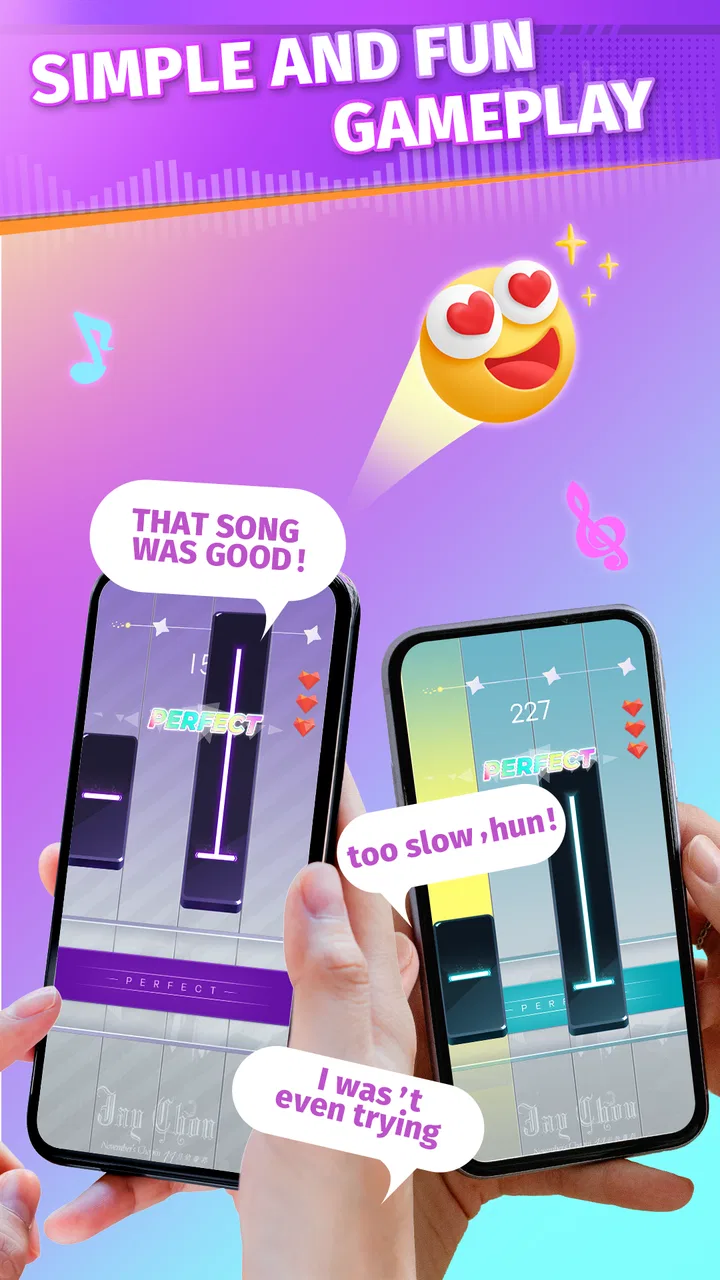
Magic Piano: EDM Music is a rhythm game in which you tap, hold, and follow musical notes as they move across the screen. Its main focus is electronic dance music, with energetic tracks, colorful visual effects, and progressively faster challenges. The game is designed for short sessions, but higher difficulty levels require concentration, timing, and quick reactions to maintain a high score.
02Is Magic Piano: EDM Music free to download and play?
The game can generally be downloaded for free, allowing players to try its basic songs and features without an upfront purchase. However, free-to-play rhythm games commonly include advertisements, optional in-app purchases, or locked content that can be unlocked through progress or payment. Before downloading, check the current store listing for pricing, subscriptions, advertising details, and available purchase options.
03Can I play Magic Piano: EDM Music offline?
Some parts of the game may work without a constant internet connection, especially if songs and essential resources have already been downloaded. Nevertheless, an internet connection may be required for advertisements, new song content, cloud saving, events, rankings, updates, or purchases. If offline play is important to you, test the game in airplane mode after installation rather than assuming every feature will remain available.
04What devices are compatible with Magic Piano: EDM Music?
Compatibility depends on the version available for Android or iOS and the developer’s current technical requirements. Most recent phones and tablets should handle the basic gameplay, but older devices may experience slower performance, delayed touch response, or reduced visual quality. Check the official app-store page for the minimum operating-system version, required storage, permissions, and any device-specific limitations before installing.
05Does Magic Piano: EDM Music require musical experience?
No musical training is necessary to begin playing. The game teaches its mechanics through simple tapping and timing, so new players can understand the controls within a few rounds. The challenge comes from reacting accurately as notes become faster and more complex. Players who enjoy rhythm games will likely progress quickly, while beginners may need practice to improve timing, combos, and performance on harder songs.
Pros
- Large song library with EDM
- pop
- and classical-inspired tracks.
- Simple tap-based controls are easy for beginners to learn.
- Short sessions make it suitable for quick breaks or casual play.
- Unlockable content provides a steady sense of progression.
- Bright visuals and effects make performances feel energetic.
Cons
- Many songs and features require in-app purchases or extended progression.
- Frequent effects may feel distracting on smaller screens.
- Gameplay can become repetitive after extended sessions.
- Timing becomes less forgiving as songs reach higher difficulties.
- An internet connection may be needed for some content and rewards.

Magic Piano:EDM Music game
Gallery